
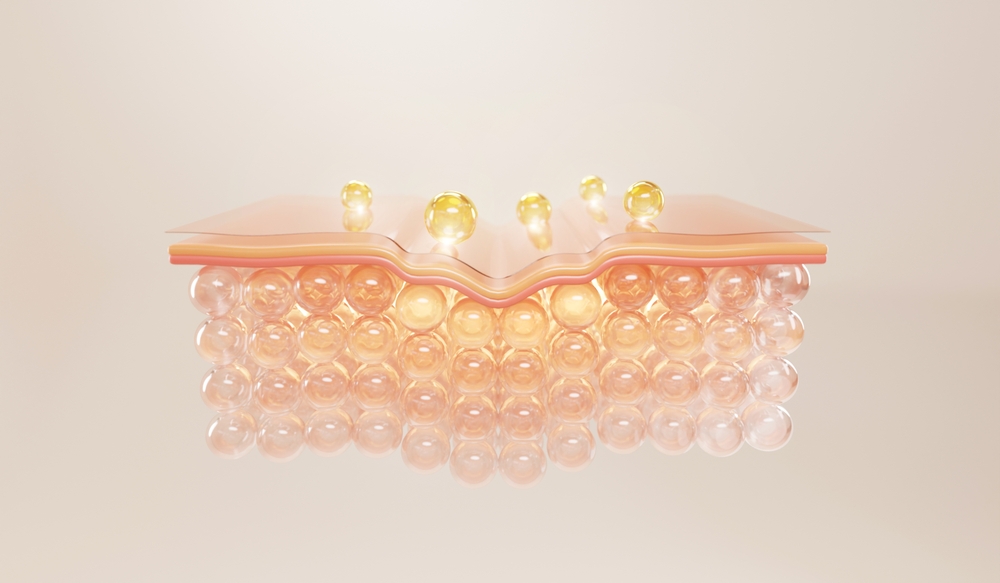
The Collagen Collapse Nobody Talks About
How Your 40s Shift the Case From Fillers to Biostimulators
Most people do not wake up one morning in their 40s and suddenly look older. It is usually more subtle than that.
The face starts to look a little less supported. The cheeks do not reflect light the same way. The jawline looks softer. The skin feels thinner. Fine lines do not bounce back as quickly. Makeup sits differently. The face may still look like you, but it does not look as firm, rested, or resilient as it did a decade earlier.
This is the stage where many people start thinking about filler. And sometimes filler is part of the answer. But in your 40s, the conversation often needs to shift from simply adding volume to rebuilding support.
That is where biostimulators come in.
The Real Issue Is Not Always Volume
For years, aesthetic medicine talked about facial aging mostly as volume loss. The solution seemed obvious: replace the volume with filler.
That model is incomplete.
Aging affects the skin, fat pads, muscles, ligaments, bone structure, and collagen-rich support network of the face. The skin is not just a surface. It is living tissue supported by an internal framework. When that framework weakens, the face can begin to look tired, hollow, loose, or heavy even before there is dramatic sagging.
Collagen is a major part of that framework. Cleveland Clinic describes collagen as the body’s most abundant protein and a primary building block for skin, muscles, bones, tendons, ligaments, and other connective tissues.
When collagen declines, the face loses some of the structure that helps skin look firm, smooth, and supported.
Why the 40s Are Different
The 40s are often the decade when earlier collagen loss becomes visible.
Collagen production begins declining earlier in adulthood, but the accumulated effect becomes harder to ignore with time. Research on skin aging has shown that reduced synthesis of type I and type III collagen is characteristic of chronologically aged skin. Other research describes aging skin as having progressive collagen loss and fragmentation, which contributes to thinner and structurally weakened skin.
That matters because collagen is not just about wrinkles. It affects firmness, elasticity, thickness, skin quality, and how well the face holds its shape.
By the 40s, many patients are not only dealing with a line or hollow. They are dealing with a change in tissue behavior. Skin is slower to recover. The face is less supported. The same amount of filler that looked good at 34 may not create the same result at 44.
This is where the treatment strategy needs to mature.
Filler Can Replace Volume, But It Does Not Rebuild the Whole System
Hyaluronic acid fillers like Juvederm and Restylane can be excellent tools. They can restore volume, refine lips, soften folds, support cheeks, improve contour, and help balance facial proportions.
But filler is not collagen. It does not teach the skin to behave younger. It does not rebuild the entire structural network of the face. It can replace volume in a targeted area, but it does not automatically improve overall tissue quality.
That is why some patients reach a point where more filler does not create a better result. The face may look fuller, but not firmer. Softer, but not more lifted. Filled, but not truly restored.
When the underlying problem is collagen depletion and tissue laxity, simply adding more volume can make the face look heavier instead of healthier.
What Biostimulators Do Differently
Biostimulators are injectable treatments designed to encourage the body’s own collagen-building response. Instead of only placing volume into the face, they work with the tissue over time.
Sculptra and Radiesse are two of the best-known biostimulatory injectables.
Sculptra is made with poly-L-lactic acid, or PLLA. The FDA approved Sculptra for correction of fine lines and wrinkles in the cheek region in immune-competent patients in 2023. It is commonly used when the goal is gradual collagen stimulation and broader improvement in facial support.
Radiesse is made with calcium hydroxylapatite, or CaHA. Its FDA labeling includes correction of moderate to severe facial wrinkles and folds such as nasolabial folds. Research describes Radiesse as providing immediate volume support while also supporting increases in collagen, elastin, vasculature, proteoglycans, and fibroblast populations through a cell-biomaterial interaction.
In practical terms, Sculptra tends to be used for gradual, diffuse collagen support. Radiesse tends to be used when more immediate structure and biostimulation are both useful. Neither is automatically better. They are different tools for different faces.
Why Biostimulators Often Make Sense in the 40s
The 40s are often the point where patients are still early enough to improve the trajectory of aging, but far enough along to see that surface-level correction is not enough.
This is the same principle that drives regenerative and longevity medicine. The goal is not to wait until decline becomes severe and then chase symptoms. The goal is to identify the underlying process early enough to support repair, resilience, and better long-term function.
Aesthetically, that means asking a better question than, “Where can we put more filler?”
The better question is, “What is the skin and tissue losing, and how do we support it?”
For some patients, that answer may include biostimulators. For others, it may include CoolPeel, BBL, microneedling, RF microneedling, medical-grade skincare, hormone optimization, nutrition, sleep, and metabolic support. The face does not age separately from the body. Skin quality is influenced by inflammation, hormones, sun exposure, stress, weight changes, muscle loss, and overall health.
That is why an integrated aesthetic plan often looks different from a one-time filler appointment.
The Difference Between Looking Filled and Looking Restored
There is a point where more filler can make the face look less natural, not more youthful.
A filled face may look smooth but heavy. A restored face looks supported, balanced, and alive. The distinction matters.
Biostimulators appeal to many patients because the goal is not dramatic overnight change. The goal is gradual improvement in the quality and support of the tissue. Results develop over time, which often makes the change look more natural.
This is especially important for patients who do not want people to know they had “work done.” They simply want to look like their face has more strength, firmness, and vitality.
When Filler Is Still the Right Choice
This is not an argument against filler.
Filler is still the right choice when the concern is specific volume loss, contour, lip shape, facial balancing, or targeted support that can be corrected with a hyaluronic acid product. A well-placed filler treatment can be elegant and subtle.
The issue is not filler itself. The issue is using filler as the answer to every aging concern.
In the 40s, a patient may need filler in one area, a biostimulator in another, resurfacing for texture, BBL for pigment, and skincare for maintenance. That does not mean the plan needs to be aggressive. It means the plan needs to be accurate.
When Biostimulators May Be the Better Conversation
Biostimulators may be worth discussing when the face looks thinner, looser, crepier, or less supported overall. They may also be appropriate when the patient wants gradual improvement, does not want obvious volume, or has reached a point where additional filler is no longer producing the right kind of result.
They may be especially relevant after weight loss, during perimenopause or menopause, or in patients who notice that their skin quality has changed more than their actual facial shape.
However, biostimulators are not casual treatments. They are not instantly reversible in the same way many hyaluronic acid fillers can be. They require appropriate patient selection, careful placement, realistic expectations, and a provider who understands facial anatomy.
Why Restraint Is Part of Good Medicine
In aesthetics, restraint is not hesitation. It is clinical judgment.
The best provider is not the one who adds the most product. The best provider is the one who can explain why a treatment is appropriate, why another treatment is not, and how the plan supports the patient long term.
That is the difference between chasing aging and managing it intelligently.
Patients do not need a provider who simply agrees to add more. They need a provider who can step back, assess the whole face, consider the health of the skin and tissue, and build a plan that still makes sense five years from now.
Your 40s Are the Decade to Start Thinking Structurally
The collagen changes that show up in your 40s are not just cosmetic. They are structural. The face begins to lose some of the internal support that keeps skin firm, smooth, and resilient.
Filler can help when the issue is volume. But when the deeper issue is collagen depletion, skin thinning, and loss of tissue support, biostimulators may be the more strategic conversation.
If you are noticing that your face looks less firm, less lifted, or less resilient than it used to, Trinity Med Spa can help determine whether filler, Sculptra, Radiesse, CoolPeel, BBL, medical-grade skincare, or a combined regenerative aesthetic plan is the right fit. Schedule a consultation in Cumming GA to discuss collagen support, facial aging, and natural-looking rejuvenation for patients in Cumming, South Forsyth, Windermere, Vickery Village, West Forsyth, Alpharetta, Milton, Lake Lanier, and surrounding Forsyth County communities.